I remember the first time I seriously looked into color mixing. The question sounded simple: what two colors make red. But once I started experimenting with paints, design tools, and print materials, I realized the answer depends on how color is being created.
In traditional painting, red is considered a primary color. That means you usually start with red paint rather than mixing two colors to produce it. However, in printing and certain color systems, two colors can combine to create red. Understanding this difference helps artists, designers, and hobbyists avoid confusion when mixing or reproducing colors.
Key Takeaways
Red is generally considered a primary color in traditional paint mixing. Because of this, artists typically begin with a red pigment instead of creating it from two paints. In printing systems such as CMYK, magenta and yellow combine to produce red. Knowing the difference between these color systems helps artists, designers, and hobbyists work with color more effectively.
Is Red a Primary Color or a Mixed Color?
In traditional art education, red belongs to the group of primary colors along with blue and yellow. Primary colors act as the base colors used to create many other shades. Because of this, artists normally cannot mix two common paints to create a pure red.
This is why most painters begin with a red paint tube and adjust it to achieve different tones. Whether someone is working with acrylics, watercolors, or wall paint, red usually functions as a starting point rather than a color produced by mixing other paints.
Color theory used in printing works differently. Instead of red, the primary colors are cyan, magenta, and yellow. These colors interact through ink absorption to create a wide range of colors, including red.
What Two Colors Make Red in Printing?

When someone asks what two colors make red in printing, the answer is magenta and yellow. These two inks combine to reflect red light when printed on paper. This process belongs to the CMYK color model used in printers. Instead of blending pigments like paint, printing uses layers of ink that absorb and reflect light differently.
When magenta and yellow overlap, they create the red color the eye sees. This difference explains why a design might look slightly different on screen compared to a printed page. Screens rely on RGB light, while printers rely on CMYK ink mixtures.
Why Do Artists Start With Red Instead of Mixing It?
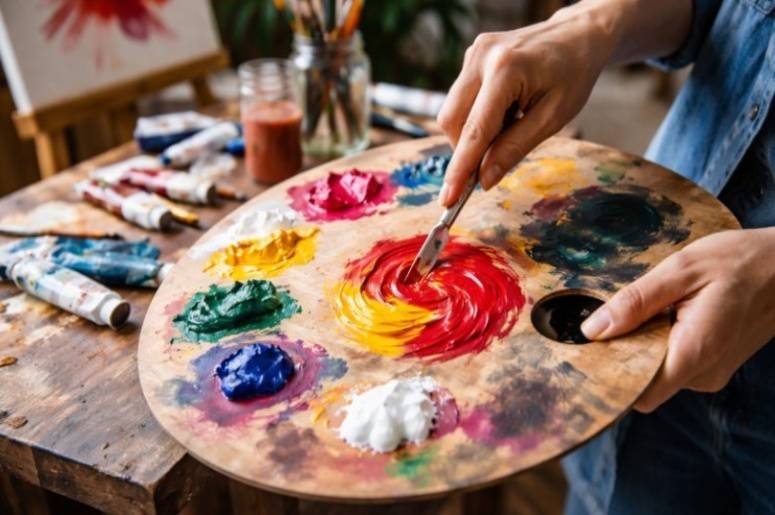
From a practical perspective, it is easier and more accurate to start with a red pigment. Mixing multiple colors to try to create a pure red often produces muddy or dull tones. Artists typically modify red instead of building it. For example, they might add white to make a lighter shade or introduce darker pigments to create deeper tones.
This approach preserves the brightness of the red while still allowing creative control over the final shade. Painters who work on portraits, landscapes, or decorative art often rely on several versions of red rather than attempting to create one from scratch.
How Do I Create Different Shades of Red?
Once a red base exists, it becomes very easy to modify it into different shades. Artists and designers regularly adjust red for different visual effects. Adding white can produce lighter reds such as pink or rose tones. Introducing small amounts of darker pigments can deepen red into burgundy or maroon shades.
Slight touches of yellow can warm a red, while cooler pigments can shift it toward crimson. The key is making gradual adjustments rather than adding large amounts of pigment at once. This keeps the color vibrant and prevents dull mixtures.
How-To: How I Approach Mixing and Creating Red
First, I identify what medium I am working with. If I am painting, I treat red as a base color rather than trying to create it from two other paints. Next, I check whether the project involves printing or digital design. If the final product will be printed, I remember that magenta and yellow are responsible for producing red in the CMYK color model.
Then I test small samples before applying the color to a full surface. Testing helps reveal how the red will appear on different materials like paper, fabric, or canvas. Understanding basic color relationships—like orange and blue make what color—also helps me predict how pigments will interact before I mix them.
Finally, I adjust the shade slowly. Adding tiny amounts of pigment or color adjustments makes it much easier to control the final result.
Why This Question Confuses So Many People
Many people learn simplified color theory early in school. They hear that colors come from mixing other colors, which leads them to assume every color must come from two others. The confusion appears when different color systems are introduced.
Paint mixing follows one set of rules, while printing and digital color use completely different models. Once the difference between paint pigments and printing inks becomes clear, the question becomes much easier to understand.
Frequently Asked Questions
1. Can I mix two paints to create pure red?
In traditional painting, pure red usually cannot be created by mixing two standard paints. Artists typically start with a red pigment and modify it to create different shades.
2. Why does my printer create red without red ink?
Printers use the CMYK color system. In this model, magenta and yellow combine to produce red when layered together.
3. Why does red sometimes turn muddy when I mix paint?
Adding too many pigments at once often dulls the color. Limiting the number of colors and making small adjustments helps maintain brightness.
Final Thoughts
When I first explored color mixing, I expected a quick answer to the question what two colors make red. What I discovered instead is that the answer depends on the system being used. In traditional painting, red acts as a primary color and usually cannot be created from two other paints. In printing, however, magenta and yellow combine to produce red.
This difference completely changed the way I approach color mixing. Once I know the medium I am working with, choosing or creating the right red becomes much simpler.